Cases for handling zero-rated VAT sales when exported goods are returned for defects or repair
Automatically translated from Korean.

Key answer — If exported goods are returned due to defects and an import VAT tax invoice is issued by the head of the customs office upon re-importation, deduct the value of the returned goods from the tax base for the taxable period that includes the date of re-importation. If the goods are declared as ordinary imports without applying for re-import duty exemption, and duties and VAT are paid before repairing and re-exporting them, do not deduct the amount from the tax base upon re-importation. VAT is also not imposed when the repaired goods are re-exported.
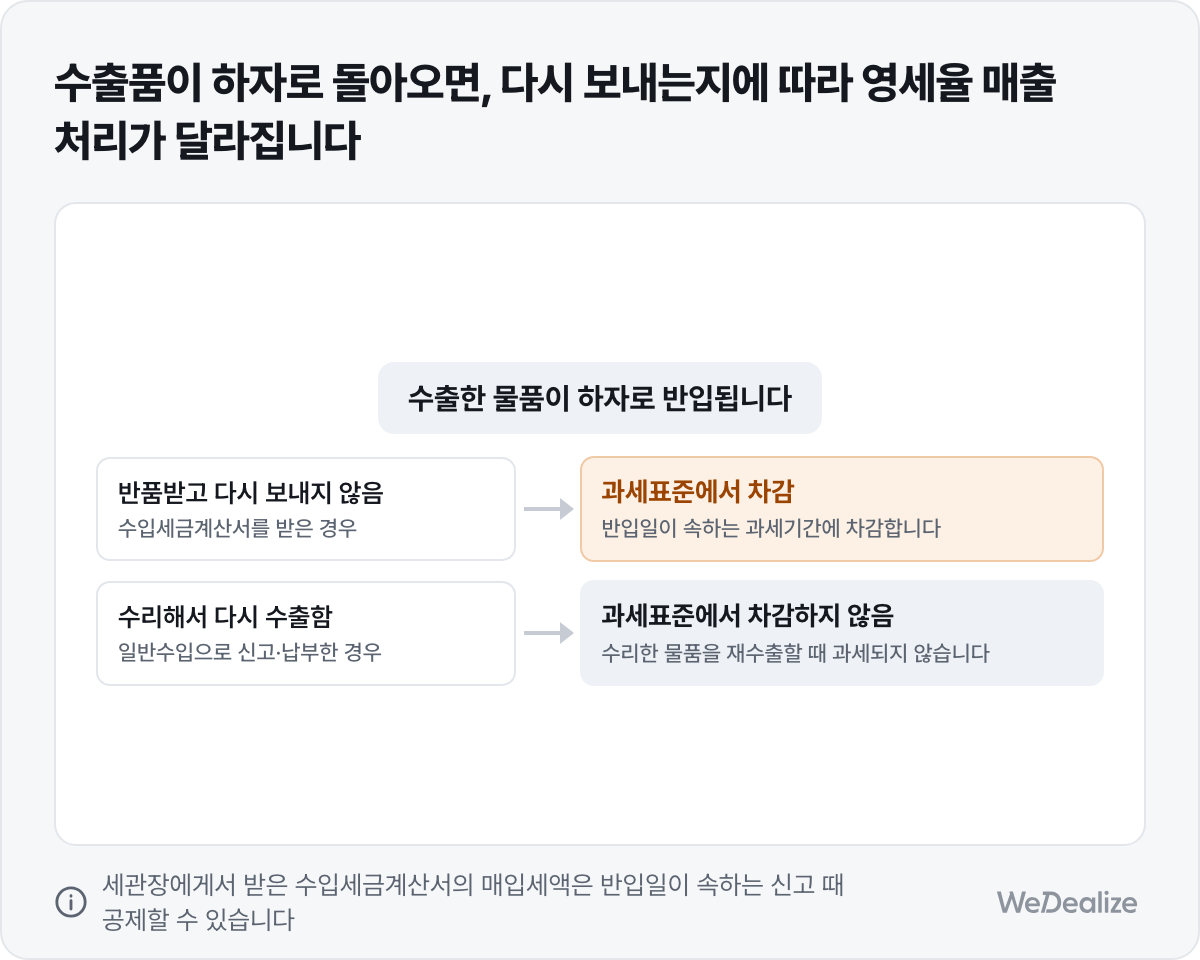
When defective goods are returned and not sent again
This applies when an overseas customer returns exported goods because they are defective. The export was already reported as zero-rated sales in one taxable period, but the returned goods may be re-imported in the following taxable period.
The VAT tax base (the amount used to calculate tax) is the total value of goods supplied during the taxable period. The value of returned goods (goods that were supplied and then returned) is not included in the value of supply.
According to the National Tax Service’s authoritative interpretation, if exported goods are re-imported due to defects and an import VAT tax invoice is issued, deduct the value of the returned goods. Make the deduction when filing the preliminary or final VAT return for the taxable period that includes the re-importation date, not for the taxable period in which the goods were originally exported.
According to the National Tax Service’s authoritative interpretation, if an import VAT tax invoice is issued by the head of the customs office upon re-importation, the related input VAT may be credited when filing the preliminary or final VAT return for the taxable period that includes the re-importation date.
There is an important point to note. The amount to deduct is the value of the returned goods. If the amount reported at export differs from the amount at return, confirm with a tax accountant which amount should be deducted.
When goods are repaired and re-exported
This applies when defective products are brought into Korea, repaired, and then sent back to the overseas customer free of charge. Upon re-importation, there are cases where the goods are declared as ordinary imports without applying for re-import duty exemption (a system that reduces or exempts customs duties on the condition that the goods will be re-exported). In this case, duties and VAT are paid.
According to the National Tax Service’s authoritative interpretation, do not deduct the value of supply from the tax base upon re-importation for these goods. The input VAT shown on the import VAT tax invoice issued upon re-importation may be credited against output VAT. VAT is not imposed when the repaired goods are re-exported.
There is an important point to note. If a different product is sent instead of the repaired goods, confirm with a tax accountant whether the conclusion of this interpretation applies.
Points to check
Before filing the re-import declaration, determine whether the goods are being returned or are intended to be sent again after repair. Confirm the re-import declaration procedure with a customs broker.
Check the re-importation date and whether an import VAT tax invoice was issued, and determine the VAT filing period that includes that date.
If the overseas customer also charges local taxes or freight, first compare the charges against the contractual terms.