Animal Quarantine
Automatically translated from Korean.
Definition in one line — Animal quarantine is the process of checking quarantine certificates and conducting inspections when importing designated quarantine commodities, such as animals and livestock products, to prevent the introduction of contagious animal diseases.
Other names: Animal Quarantine · Animal Quarantine
In simple terms
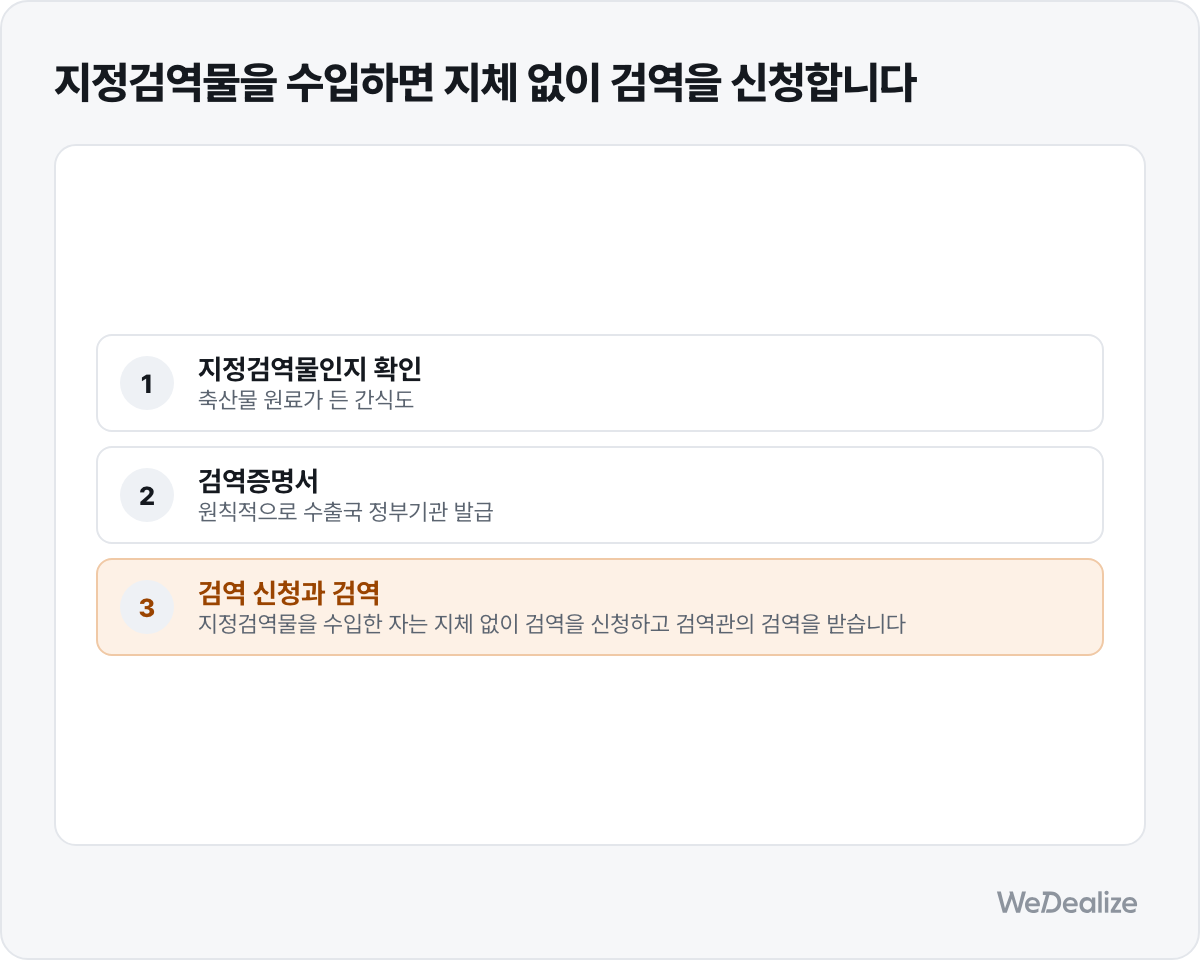
Animal quarantine is the “gateway that prevents contagious animal diseases from crossing borders.” Under the Act on the Prevention of Contagious Animal Diseases, anyone importing designated quarantine commodities, such as animals and livestock products including meat and leather, must in principle attach a quarantine certificate issued by a government agency of the exporting country. However, exceptions apply, such as when importing from a country that has no government agency responsible for animal quarantine. Importers must apply for quarantine inspection with the animal quarantine authority without delay and undergo quarantine inspection by a quarantine inspector. For example, when importing products containing livestock products, such as pet food or jerky, you must check whether they are designated quarantine commodities.
When is it required?
When importing products containing livestock products — Check whether the product is a designated quarantine commodity and whether import sanitary requirements apply to the country.
When entering into a contract with an overseas supplier — Ask the supplier to prepare a quarantine certificate issued by a government agency of the exporting country.
When the cargo arrives — Apply for quarantine inspection with the animal quarantine authority without delay and undergo quarantine inspection by a quarantine inspector.
Example
CEO Kim plans to import 500 bags of overseas pet treats to sell together with tumblers. Since the ingredients include meat, Kim checks with a customs broker whether the treats qualify as designated quarantine commodities and what import sanitary requirements apply to the country. Kim asks the supplier to prepare a quarantine certificate issued by a government agency of the exporting country. When the cargo arrives, Kim applies for animal quarantine without delay and undergoes quarantine inspection by a quarantine inspector.
The quantity in this example is assumed for illustrative purposes.
Common points of confusion
“Processed food is unrelated to animal quarantine.” — This is incorrect. Processed products may also qualify as designated quarantine commodities, such as meat-processed products including non-sterilized ham and sausages, or feed publicly notified by the head of the Animal and Plant Quarantine Agency. The items covered by the notification are feed for livestock under the Livestock Industry Act, and the list includes animal-protein ingredients such as meat meal, meat-and-bone meal, egg powder, and jerky. Whether pet treats fall under this list cannot be determined solely from the wording of the notification, so check with the Animal and Plant Quarantine Agency before importing.
“A quarantine certificate may be issued by the factory.” — This is incorrect. In principle, a quarantine certificate must be issued by a government agency of the exporting country. When entering into a contract, ask the supplier to prepare a quarantine certificate issued by a government agency.
Related terms
Plant Quarantine
Sanitary Certificate
Import Food Declaration
Import Requirements