Air Waybill (AWB)
Automatically translated from Korean.
One-line definition — An Air Waybill (AWB) is a document prepared by the shipper and delivered to the carrier for air transportation.
Also known as: air waybill · airway bill · AWB · Air Waybill
In simple terms
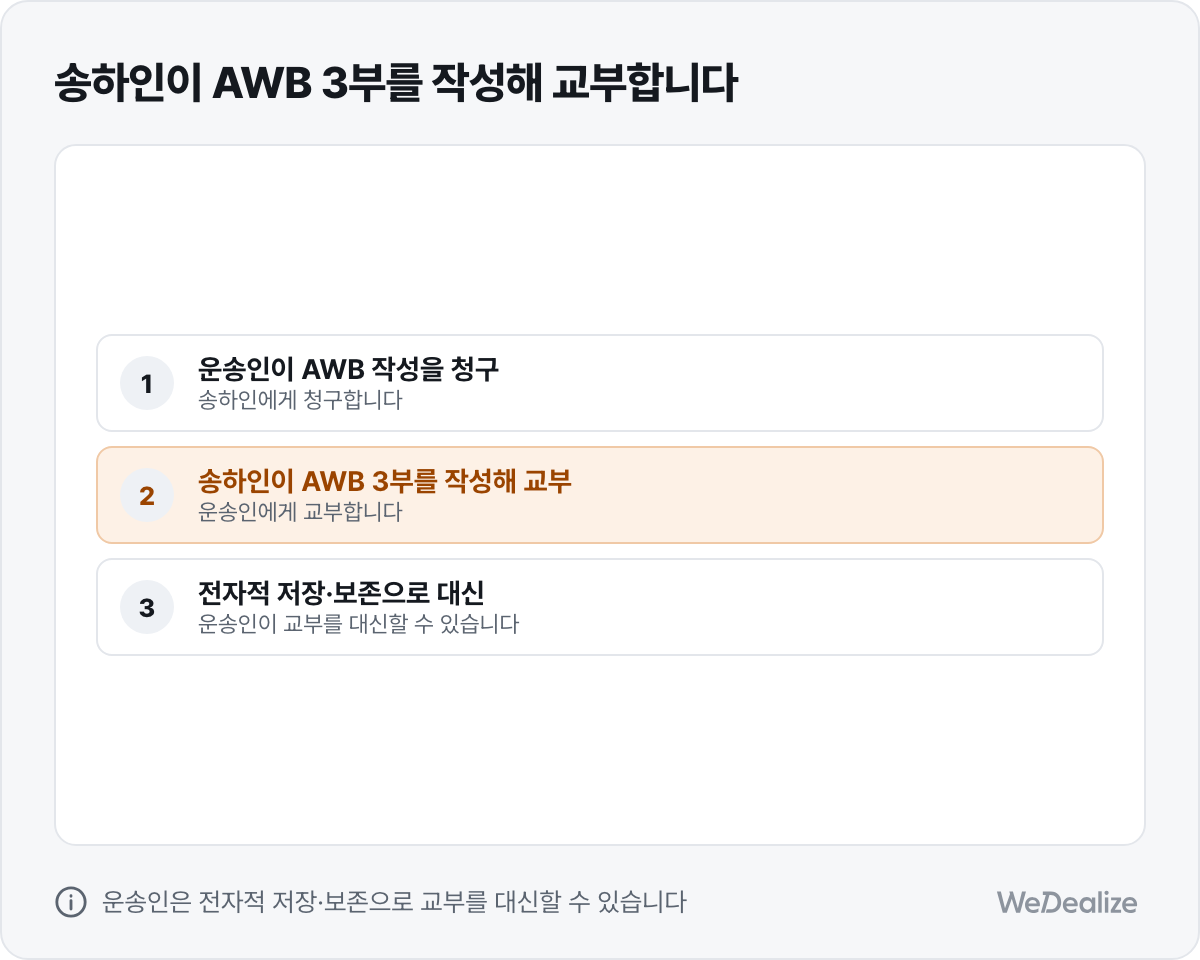
An AWB is similar to a "parcel shipping label" for air cargo. It includes the shipper and consignee, the type, weight, and number of packages of the goods, the place of departure and destination, and the flight to be used for transportation. Upon the carrier's request, the shipper prepares three copies of the AWB and delivers them to the carrier. If the carrier prepares it at the shipper's request, it is presumed to have been prepared on behalf of the shipper. Once the AWB is delivered, the contract of carriage is presumed to have been concluded in accordance with its contents. The carrier is presumed to have received the cargo with the weight, dimensions, type and number of packages, marks, and apparent condition stated on the AWB. The carrier may also store and retain the AWB information in electronic form instead of delivering an AWB. Consult a customs broker regarding the differences from an ocean B/L and the method of cargo delivery.
When is it needed?
When sending cargo by air — The shipper prepares and delivers the AWB upon the carrier's request.
When retaining it electronically — The carrier may store and retain the AWB information in electronic form instead of delivering an AWB.
Related terms
House B/L · Master B/L
Chargeable weight (air)
Bill of lading (B/L)
Compare — Differences between a bill of lading and an Air Waybill (AWB)
View document — How to read an Air Waybill (AWB)