PSE Mark (Japan)
Automatically translated from Korean.
One-line definition — The PSE Mark is a label affixed to electrical appliances that have been confirmed to comply with technical standards under Japan’s Electrical Appliances and Materials Safety Act.
Other names: PSE · Electrical Appliances and Materials Safety Act · Japan Electrical Appliances and Materials Safety Act · PSE certification · PSE Mark
In simple terms
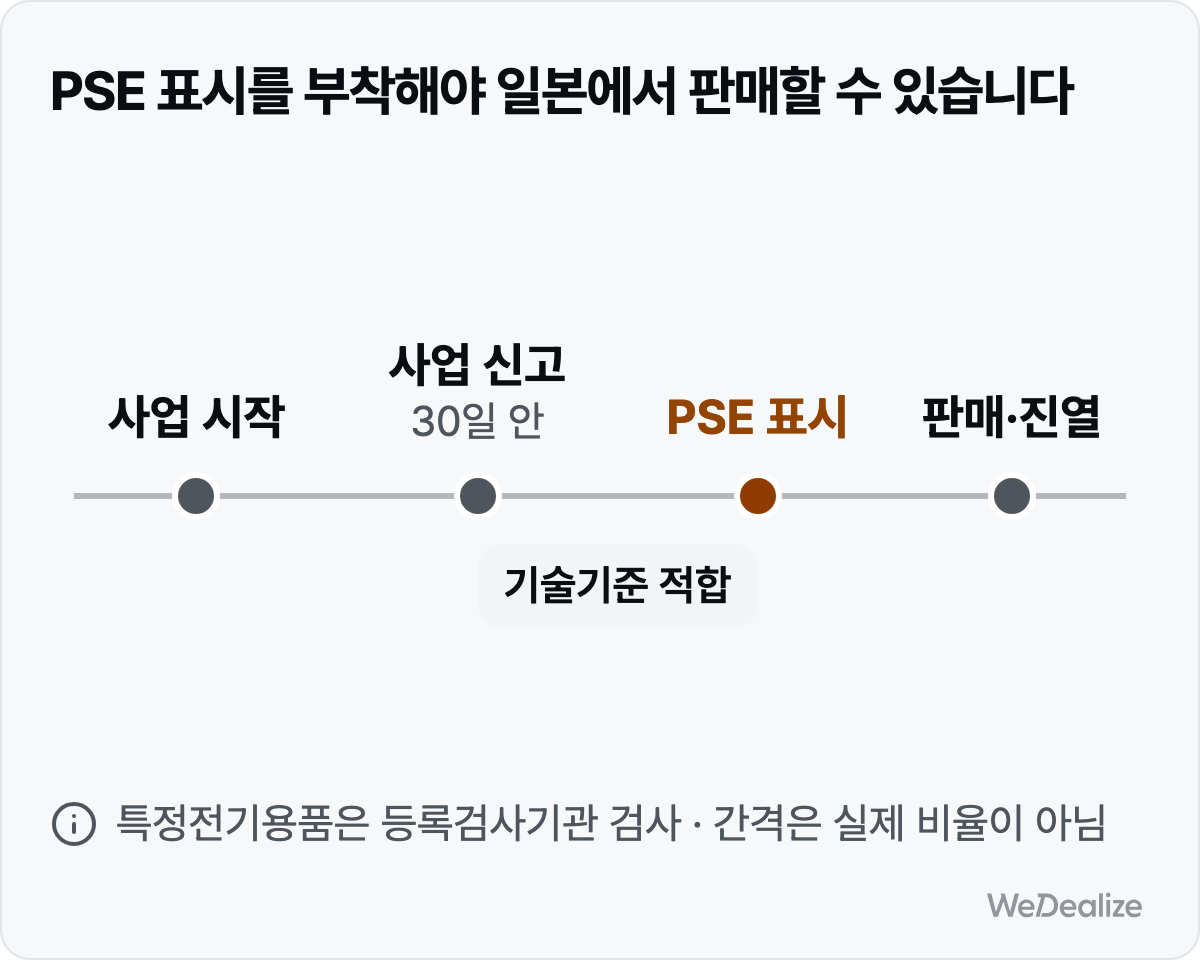
The PSE Mark is a “pass” for selling electrical appliances in Japan. Under Japan’s Electrical Appliances and Materials Safety Act, electrical appliances without this mark may not be sold or displayed for the purpose of sale. The mark is affixed after the manufacturer or importer notifies the Ministry of Economy, Trade and Industry of its business and fulfills its obligation to comply with technical standards.
When is it required?
When selling electrical appliances in Japan — Manufacturers and importers must notify the Ministry of Economy, Trade and Industry according to the applicable category of electrical appliance within 30 days from the date they start their business.
When handling specified electrical appliances — For specified electrical appliances designated as high-risk products, the business must undergo a conformity assessment by a registered conformity assessment body and retain the certificate before selling them.
When shipping directly from Korea to Japanese consumers — Under Japanese law, goods brought into Japan by an overseas seller for a Japanese consumer are also deemed to have been imported. Such an overseas business is called a specified importer (特定輸入事業者), and it must appoint a domestic representative in Japan and submit a notification.
Example
Mr. Song plans to sell electric toothbrushes manufactured in Korea to Japanese consumers through his own online store. Even if he ships them by express delivery from Korea to Japanese buyers, importer obligations arise. Therefore, Mr. Song appoints a domestic representative in Japan and notifies the Ministry of Economy, Trade and Industry of his business. After confirming compliance with technical standards and keeping records of the in-house inspection, he affixes the PSE Mark to the products. He publishes the product page only after completing the marking.
The product and sales situation in this example are hypothetical and provided for explanatory purposes.
Common points of confusion
“If a product has received KC certification in Korea, it can also be sold in Japan.” — No. KC certification is a Korean system. In Japan, separate notification under the Electrical Appliances and Materials Safety Act and the PSE Mark are required.
“If the buyer purchases the product directly through cross-border e-commerce, the seller has no obligations.” — No. Under Japanese law, goods brought into Japan by an overseas business for a Japanese consumer are also deemed to have been imported. The seller has a notification obligation as a specified importer, and the product may not be sold or displayed without the PSE Mark.
Related terms
Domestic representative (Japan) — A person appointed by an importer located overseas to take measures in Japan to prevent the expansion of product-related risks.
Technical Standards Conformity Certification (Japan, commonly abbreviated as Jiki)
KC certification