Catalog Matching
Automatically translated from Korean.
One-line definition — Catalog matching means linking a product uploaded by a seller to the same product page already available on the marketplace and grouping them on a single page.
Also called: product matching · adding a sale to an existing product · Catalog Matching
In simple terms
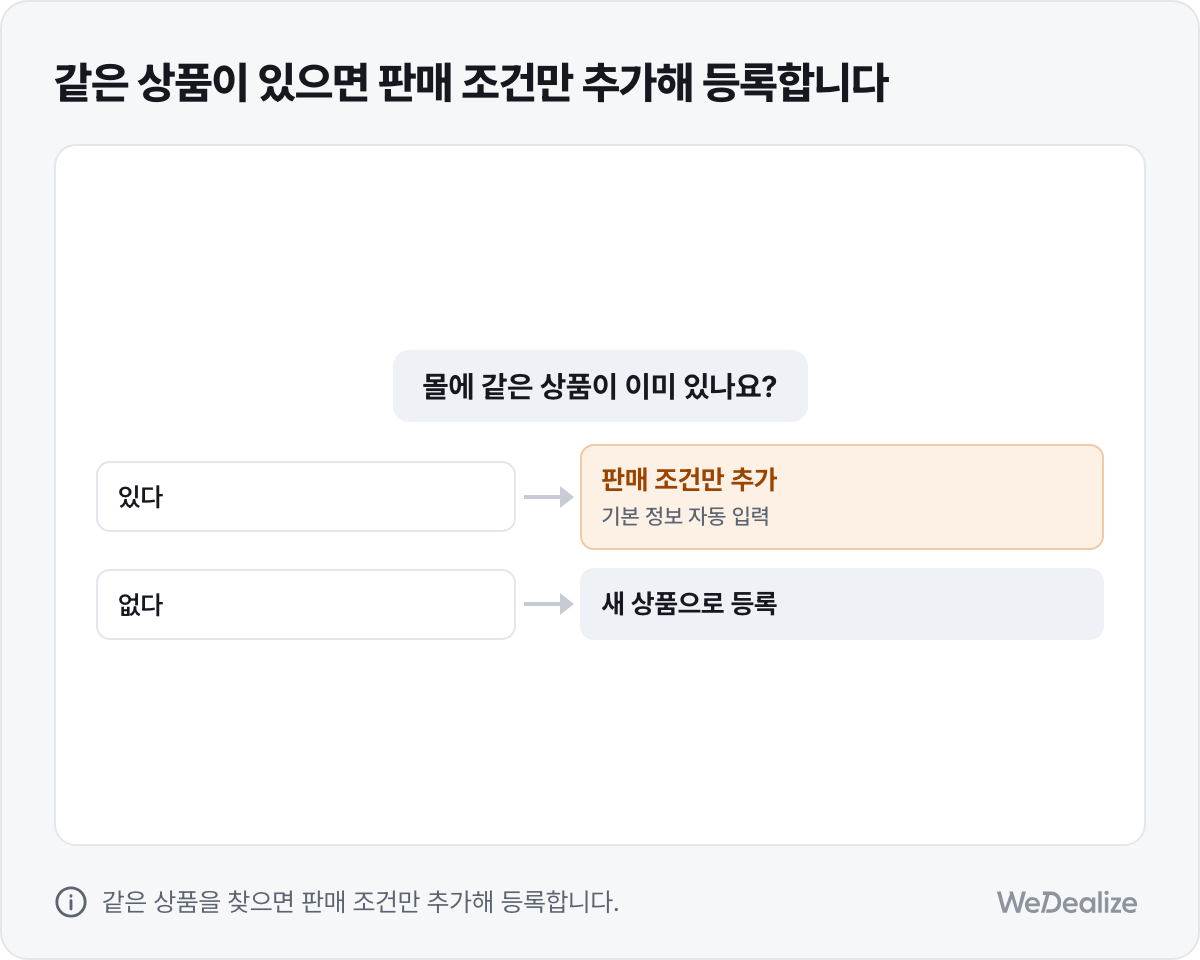
A seller searches the marketplace catalog for the same product before creating a new product, and if it exists, adds their offer (sales conditions such as the price and inventory set by the seller) to that product. Coupang includes 「Match to Catalog」 on its product registration page. It states that basic information is filled in automatically if the product is already registered. Amazon allows sellers to find the same product in its catalog using product identifiers such as UPC and EAN or search terms, and, if they find it, register by adding only their sales conditions.
When is it needed?
When uploading a product — First, search to see whether the product you want to sell is already registered. If it is already registered, the basic information is entered automatically, making registration faster.
When selling after matching — Coupang states that when products from multiple sellers are combined, it selects the Item Winner based on a comprehensive assessment of price, fast shipping, and customer service.
When entering a product identifier — Amazon has sellers find the same product using product identifiers such as UPC and EAN, so prepare the identifier in advance.
Example
Representative Han was trying to list hand cream imported from Japan on Coupang and found the same product using 「Match to Catalog」. Since a page already existed, basic information such as the product name and images was filled in, and Representative Han registered as a seller by entering only the price, shipping, and return conditions. A bundled product with the same volume but a different configuration was a different product, so it was registered separately.
The product and situation in this example are hypothetical and provided for explanatory purposes.
Common point of confusion
「Matching means I can freely edit the product page」 — Amazon states that for an existing product, sellers register only the necessary information and sales conditions.