Brand Protection Program
Automatically translated from Korean.
One-line definition — A brand protection program is a system that allows trademark owners to register their brand with a marketplace, report suspected infringing products, and use brand tools.
Other names: Brand Registry · Brand Registry · Brand registration · Brand Protection Program
In simple terms
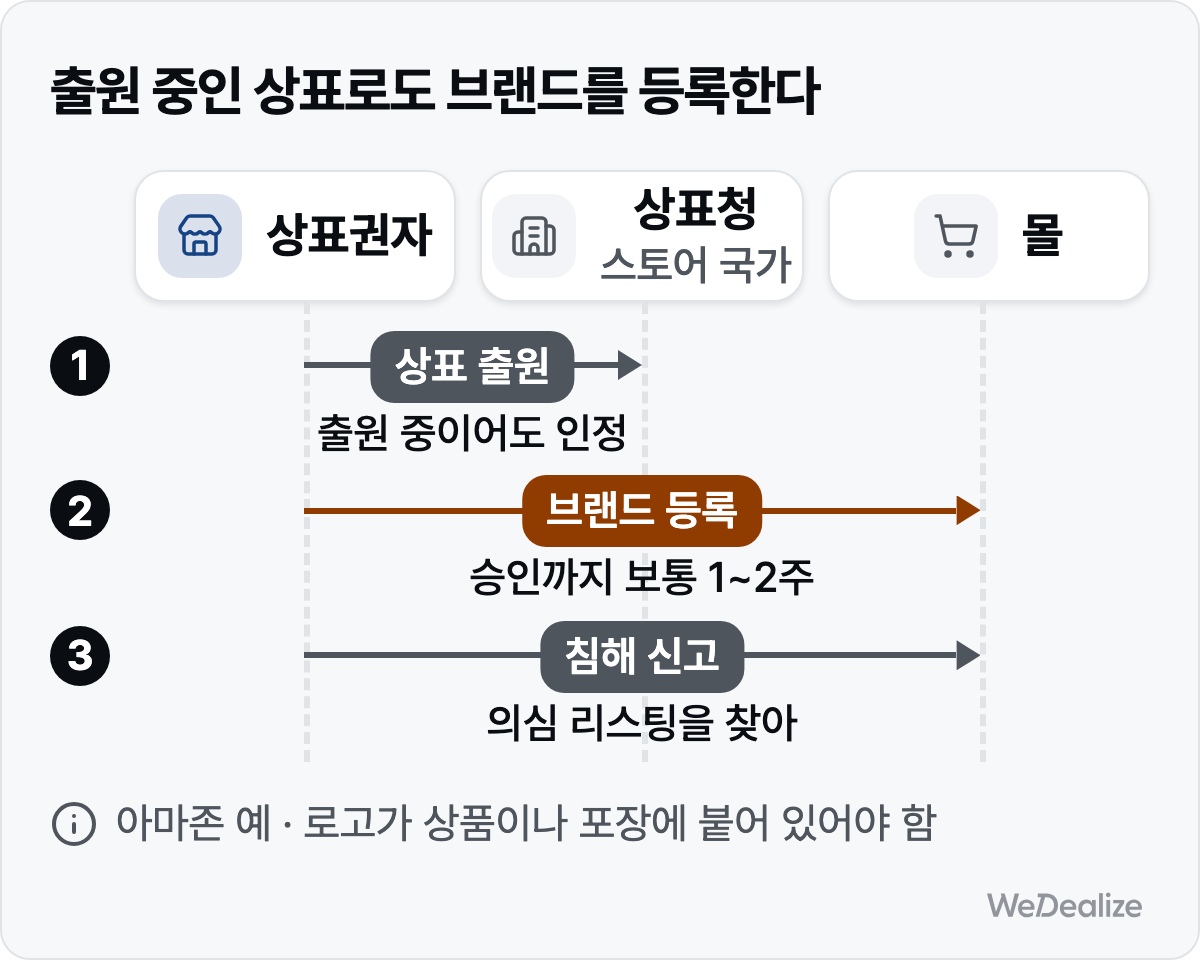
On marketplaces where anyone can list the same product, listings may appear that use someone else’s trademark without permission or sell counterfeit goods. With a brand protection program, a seller who owns the trademark can register with the marketplace to state, “I am the owner of this brand.” They can then find listings suspected of infringement and report them to the marketplace. A representative example, Amazon Brand Registry, is free, and brands that do not sell on Amazon can also register. Once registered, sellers can use tools to find and report suspected infringement, as well as brand-specific features for customizing product pages.
When is it needed?
When listing private-label products on overseas marketplaces — Amazon Brand Registry requires two things. First, a logo containing the brand name must be permanently affixed to the product or its packaging. Second, the trademark must be pending (an application has been filed) or registered with the trademark office in a country where the Amazon store operates.
Immediately after filing a trademark application — Amazon Korea’s FAQ states that registration and approval usually take 1–2 weeks. If the trademark application is pending, it recommends completing Brand Registry before creating listings. If you list products first, you may later have to connect each product to the brand one by one.
When selling another company’s branded products — Gmarket’s terms prohibit trademark infringement. Imitation products cannot be sold regardless of whether buyers were informed in advance that they were imitations. If a famous trademark is used without permission in a product name, keyword, or product detail page, Gmarket may reject the listing, deduct credit points, or even suspend the seller ID.
Example
Before launching his own cosmetics brand on Amazon US, Representative Kwon filed for a US trademark and printed the brand logo on the containers and boxes. After receiving Brand Registry approval, he created the listings and found a listing from another seller using the same logo, which he reported to the marketplace using the reporting tool.
The product and situation in this example are hypothetical and provided for explanatory purposes.
Common points of confusion
“Registering a brand automatically makes all counterfeit products disappear.” — No. Amazon provides tools for reporting suspected infringement and states that accurate reports are taken into account in automatically blocking infringement.
“You can apply only after the trademark has been registered.” — No. Amazon recognizes pending trademark applications as meeting the requirement.