UK Sales Guide — Cross-Border Direct-to-Consumer Sales
Automatically translated from Korean.
In one line — For cross-border direct-to-consumer sales to the UK, if a single consignment is worth £135 or less, the seller must register for UK VAT and collect VAT at the rate applicable to the goods at checkout; if the goods are sold through an online marketplace, the marketplace collects it. The UK government has announced that it will abolish the customs duty exemption for these consignments no later than October 2028, and consumers may cancel without giving a reason within 14 days of receiving the goods.
Scope of this article — Sending Korean products to UK consumers by international courier or post for each order (cross-border direct-to-consumer sales). See another article — Korean export declarations, simplified export declarations, and zero-rating → International Direct Shipping Guide · Return collection → International Returns Processing Guide
What to check first
How are you selling? — This article covers cross-border direct-to-consumer sales shipped by international courier or post for each order. If you sell to a UK distributor or importer, that company imports the goods → Product-Specific Export Guide
Is the single consignment (one shipment sent at one time) worth £135 or less? — This determines whether VAT is collected at checkout or paid at import. See “Customs Duty and Tax” below for how to calculate the amount.
Does the consignment contain excise goods such as alcohol or tobacco? — The £135 rule does not apply to these consignments. See “Customs Duty and Tax” below.
Are you registered for UK VAT? — If you sell consignments worth £135 or less through your own online shop, the seller must register and collect the tax at the time of sale.
Is the destination Northern Ireland? — Goods sold directly from outside the UK and the EU to consumers in Northern Ireland are handled as import VAT and follow different procedures from Great Britain.
Order of tasks
If selling through your own online shop, register for UK VAT → Selling in the UK
Collect VAT at checkout for consignments worth £135 or less → Customs Duty and Tax
Decide who will pay import taxes for consignments over £135 → Importer
Tell customers about the 14-day cancellation, refund, and return conditions before ordering → Cancellation and Returns
Selling in the UK
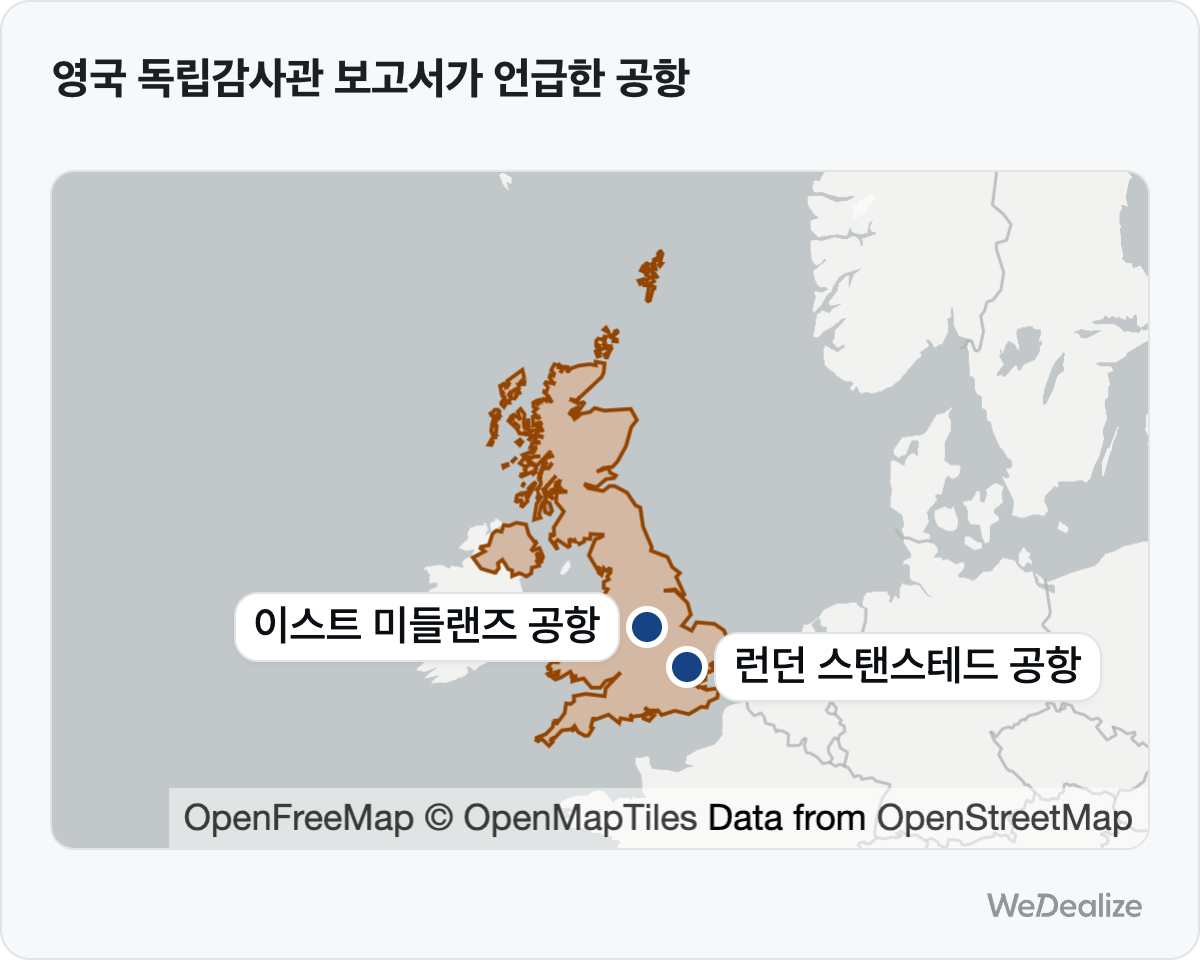
Courier or post — Whether the shipment is sent by post (Royal Mail or Parcelforce) or by courier, the delivery company handles UK customs clearance.
Sales channel — The £135 threshold is the same regardless of the sales channel; when an online marketplace is used, the marketplace handles VAT.
Online marketplace — When a consignment worth £135 or less is sold through an online marketplace, the marketplace collects and reports VAT at the time of sale.
Marketplace responsibility — If the marketplace cannot show that it took reasonable steps to collect the correct tax, the marketplace is liable for the underreported tax.
Own online shop — The seller registers for UK VAT directly, collects it, and reports it. Sellers that sell only zero-rated goods do not have to register and may apply for an exemption from registration.
Customs Duty and Tax
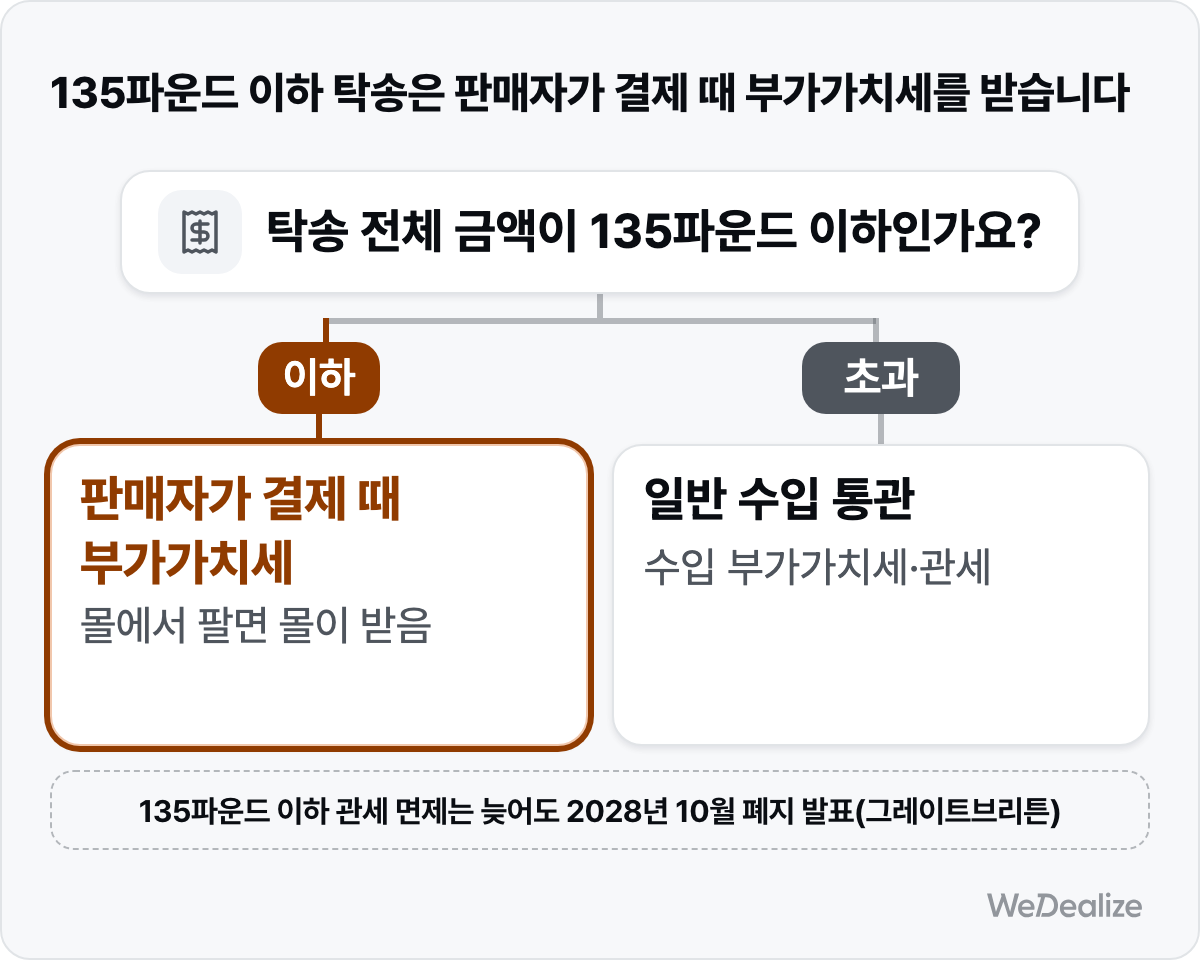
Rate — Collect VAT at the rate applicable to the goods. The standard rate set by the Value Added Tax Act 1994 is 20%.
Consignments worth £135 or less — Supply VAT is collected at the time of sale. The former import VAT exemption for consignments worth £15 or less has been abolished.
How to calculate £135 — The threshold is determined based on the value of the entire consignment, not each item. Calculate it using the sale price, excluding shipping and insurance. However, if shipping and insurance are included in the price and are not listed separately on the invoice, the amount including them is used for the assessment.
Consignments excluded from the rule — Consignments containing excise goods and non-commercial goods such as gifts are excluded from the £135 rule. A gift must be an item purchased and sent by one individual to another, so goods sent by a seller (company) are not gifts.
Announcement on abolishing the customs duty exemption — Currently, consignments worth £135 or less can be imported without customs duty (the low-value exemption). The UK government has announced that it will abolish the customs duty exemption for these consignments arriving in Great Britain and apply the standard UK Global Tariff (UKGT) rates.
When the exemption will end — The commencement date will be set by Treasury regulations, and will be no later than October 2028. Following the July 2026 consultation outcome, the date was brought forward by six months.
Payment method after abolition — The UK government has announced that after the exemption is abolished, customs duty will be paid quarterly by the seller (or the marketplace if sold through an online marketplace). It also stated that sellers without an establishment in the UK will be required to appoint a UK fiscal representative and that an additional fee will be introduced for low-value imports.
Customs duty basis for consignments over £135 — Customs duty is charged on the value of the goods plus transport, packing, and insurance costs.
Northern Ireland — If goods sent to Northern Ireland are classified as goods at risk of moving into the EU, individual recipients must pay customs duty of €3 per item and a €2 processing fee even when the consignment is worth £135 or less. The courier will notify you whether the goods are classified this way.
Importer
Consignments over £135 — The standard import VAT and customs duty rules apply.
Who pays the tax — For consignments over £135, decide whether the seller will collect customs duty and import VAT at checkout or whether the recipient will pay them. If the seller pays in advance, this is DDP; if the recipient pays upon delivery, it is closer to DAP.
Informing the recipient — If the recipient is required to pay, state this in advance on the product page. The delivery company holds unpaid parcels for about three weeks before returning them to the seller.
Certification and Labelling
Electrical and electronic equipment — Representative or producer compliance scheme — A seller without a legal entity in the UK that sells electrical and electronic equipment directly to UK consumers must appoint a representative in the UK or join an approved producer compliance scheme (PCS) before selling.
Producer responsibility for packaging — The obligation applies to businesses established in the UK. Even if the headquarters are outside the UK, a business is treated as established in the UK if it has a postal address in the UK, such as a returns address or PO box. It must also exceed 25 tonnes of packaging and have worldwide turnover of at least £1 million to be covered.
Cancellation and Returns
14-day cancellation — The Consumer Contracts Regulations 2013 apply. A distance-selling consumer may cancel the contract within 14 days starting the day after actually receiving the goods. If one order is delivered in separate shipments, the 14-day period starts the day after the final item is received.
Cancellation exceptions — Made-to-order or personalised goods and goods that deteriorate quickly cannot be cancelled. For goods sealed for hygiene reasons, the right to cancel is lost if the seal is broken after delivery.
If the right to cancel is not disclosed — If the seller does not inform the consumer of the right to cancel, the cancellation period is extended by 12 months from the date on which it would originally have ended. If the seller provides the information late within those 12 months, the period ends 14 days after the consumer receives that information.
Refund deadline — If the seller has not offered to collect the goods, issue the refund within 14 days of receiving the returned goods. If the consumer provides proof of return earlier, the 14-day period starts on that date.
Refunding delivery charges — Refund the basic delivery charge along with the price of the goods. If the consumer separately chose a more expensive delivery option, the difference does not have to be refunded.
Returns — The consumer sends the goods within 14 days starting the day after notifying the seller of the cancellation. The consumer generally bears the direct cost of return. The seller bears it if the seller agreed to do so or failed to inform the consumer of the cost in advance.
When returning goods to Korea — State the return conditions before ordering, taking into account the international shipping cost to return the goods to Korea. Check with a customs broker how customs duty will be handled for goods returned to Korea.
Connecting through WeDealize
The process for shipping orders from an integrated overseas marketplace from the Korean center to the UK by courier is described in the International Direct Shipping Guide.
Shipping and Customs Tips
Do not alter the consignment value — If the seller alters the consignment value and it exceeds £135, import VAT and customs duty may become payable. Any VAT already reported may also need to be adjusted.
Common Mistakes
Misconception: “There is no tax if it is £135 or less” — Incorrect. Only customs duty is exempt; VAT is collected at the time of sale. The UK government has also announced that it will abolish the customs duty exemption for these consignments arriving in Great Britain no later than October 2028.
Misconception: “Each item only needs to be £135 or less” — Incorrect. The entire consignment value is used for the assessment.
Items Not Confirmed
Product safety and certification (such as UKCA) — Confirm the safety marking and responsible-person requirements for products sold in the UK with the UK product safety authority.
Specific procedures after the customs duty exemption is abolished — Check HMRC notices for the secondary legislation governing the new low-value import procedures.
Related Terms
Customs broker — A nationally qualified professional who handles import and export declarations and calculates tax amounts on behalf of the shipper.
Export declaration — The procedure for declaring to customs the description, quantity, price, and other details of goods to be exported overseas.
Simplified export declaration (e-commerce) — A simplified declaration that reduces the declaration fields required for a formal export declaration; it is mainly used for low-value e-commerce exports.
Zero-rating — A system under which a 0% VAT rate is applied to exported goods and VAT paid on purchases is refunded.