Vietnam Sales Guide — Cross-Border Direct Sales
Automatically translated from Korean.
In one line — For cross-border direct sales to Vietnam, import tax is exempted for express or postal shipments with a dutiable value of VND 1 million or less, or an import tax amount of VND 100,000 or less, but VAT has been imposed since February 18, 2025. The standard rate is 10%, and in most cases it is 8% through December 31, 2026.
Scope of this guide — This guide covers sending Korean products to Vietnamese consumers by international express or post for each order (cross-border direct sales). Covered in other guides — Korean export declarations, simplified export declarations, and zero-rated VAT → International Direct Shipping Guide · Return collection → International Returns Processing Guide
Check these first
How are you selling? — This guide covers cross-border direct sales shipped by international express or post for each order. If you sell to a Vietnamese distributor or importer, that company imports the goods → Product-Specific Export Guide
Does your own store have a Vietnamese-language interface or a .vn domain? — If so, you must obtain confirmation of registration with the Ministry of Industry and Trade before operating in Vietnam from July 1, 2026. See “Ways to Sell in Vietnam” below.
Are you telling customers that orders of VND 1 million or less are tax-free? — Since February 18, 2025, VAT has been imposed regardless of the amount. Correct the tax wording on the product page and at checkout.
Is the tax rate reduction period still in effect? — The 8% reduction applies through December 31, 2026. Recheck whether the rate returns to 10% from 2027.
Action sequence
Check whether your own store falls under the definition of a foreign platform under the e-commerce law → Ways to Sell in Vietnam
Reflect VAT on orders of VND 1 million or less in your prices and tax notices → Customs Duties and Taxes
Confirm with the express carrier who bears the VAT, then state it clearly on the product page → Importer
If you are selling through a foreign marketplace, align your return and refund standards with the marketplace policy → Cancellations and Returns
Ways to Sell in Vietnam
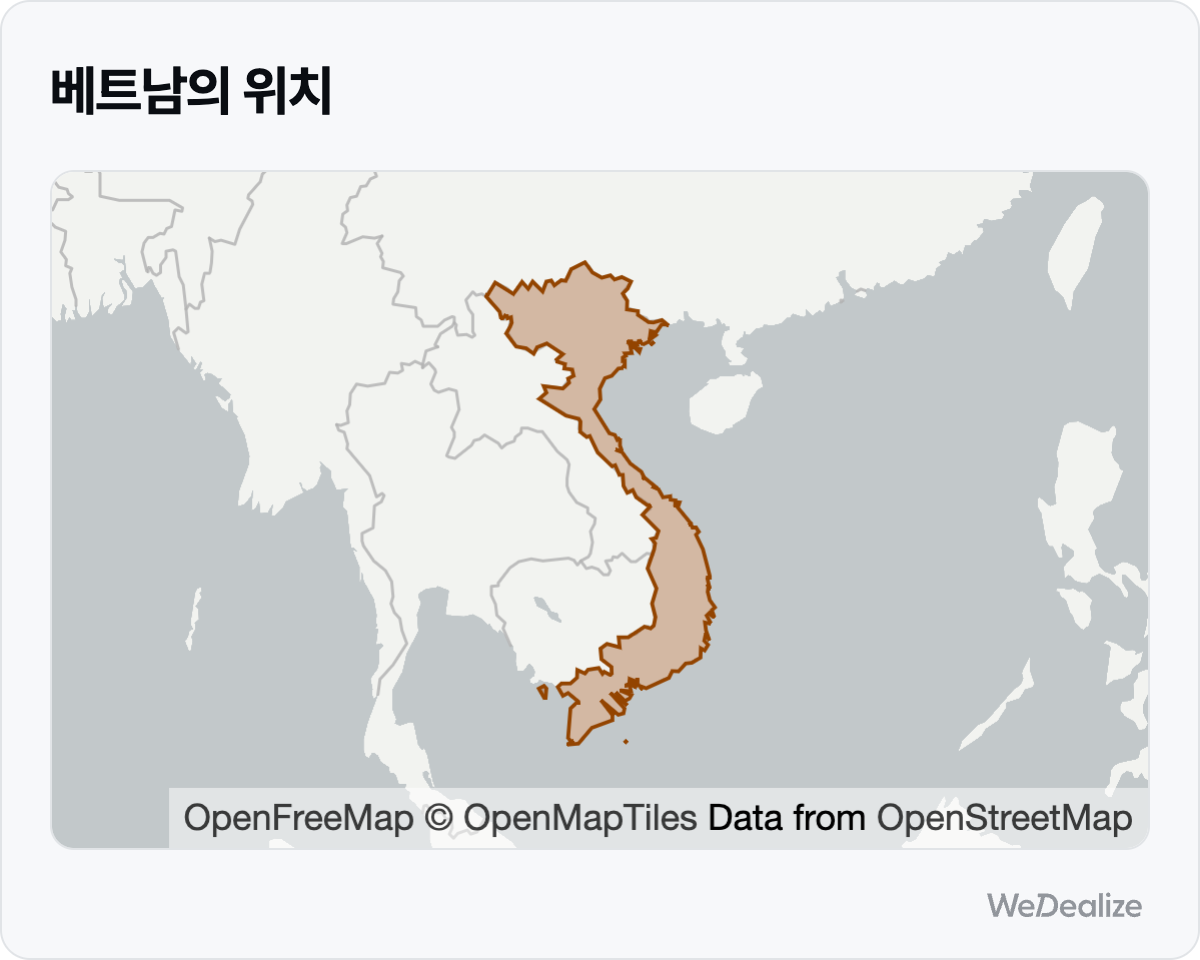
Express — Under Vietnam’s express delivery customs regulations, shipments within the import tax exemption limit and not subject to licensing or specialized inspection are cleared under the simplified group (Group 2) procedure.
Post — The same import tax exemption limit as for express shipments applies to goods sent by post. See “Customs Duties and Taxes” below.
Sales channels — Regardless of which marketplace you use, customs clearance and taxes follow the criteria above. For registration obligations applicable to foreign own stores and marketplaces, see the e-commerce law section below.
Selling through your own store or a marketplace — E-Commerce Law (effective July 1, 2026)
“Foreign platforms operating in Vietnam” — A platform operated by a foreign organization falls within this scope if it allows users to select a Vietnamese-language interface or uses a .vn domain. It also falls within this scope when transactions with Vietnamese buyers reach the prescribed threshold.
Own store (direct-sales model) — A foreign direct-sales platform with online ordering must designate one Vietnamese legal entity as an authorized representative (a local entity entrusted with the relevant duties) and register with the competent authority. The designation must be made before opening a Vietnamese-language interface or .vn domain, or after reaching the transaction threshold.
Vietnamese-language interface and .vn domain — Under the implementing decree of the e-commerce law, such a foreign own store must obtain confirmation of registration with the Ministry of Industry and Trade before operating in Vietnam.
Own store with only Korean- or English-language interfaces — If transactions with Vietnamese buyers reach 100,000 or more during a year starting January 1, the store must register with the Ministry of Industry and Trade within 60 days after reaching the threshold.
Transitional rule for prior registrations — Websites and apps for which notification or registration was confirmed before July 1, 2026 may continue operating according to the confirmed details through June 30, 2027. During that period, they must follow the procedure for amending the confirmed documents to comply with the implementing decree.
Customs Duties and Taxes
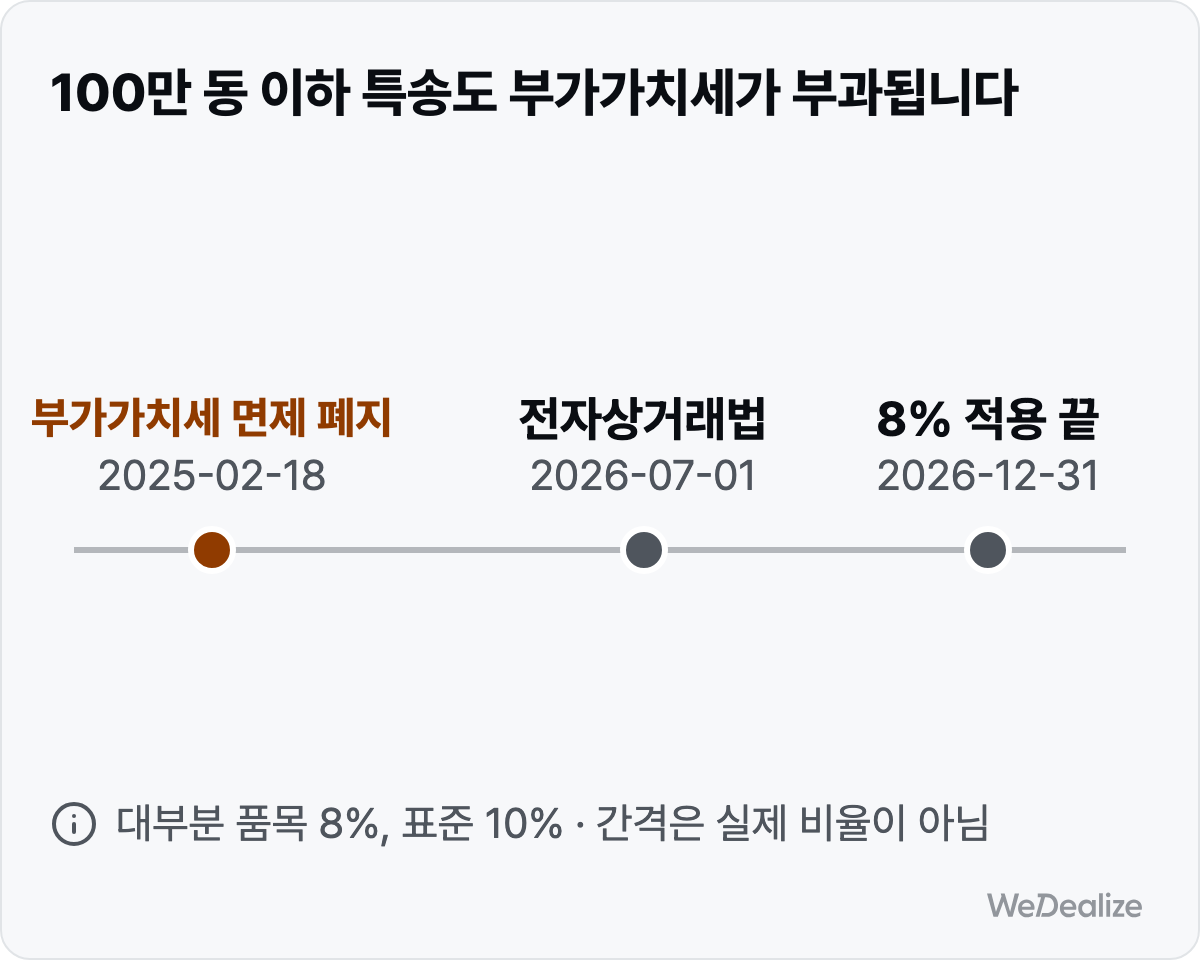
Small-value express shipment exemption — What changed?
Until February 17, 2025 — From February 1, 2011, imported goods worth VND 1 million or less brought in by express were exempt from both import tax and VAT (Prime Minister’s Decision 78/2010, small-value exemption).
From February 18, 2025 — Prime Minister’s Decision 01/2025 completely repealed Decision 78/2010. According to guidance from the General Department of Customs, the import tax exemption remains in place, but VAT must be paid.
Import tax exemption criteria — Under the implementing decree of Vietnam’s import tax law, imported goods sent by express or post are exempt from import tax if their dutiable value is VND 1 million or less or the tax amount is VND 100,000 or less. If the dutiable value exceeds VND 1 million or the tax amount exceeds VND 100,000, import tax is imposed on the entire shipment.
From August 1, 2025 — Under the Ministry of Finance’s Circular 29/2025, the customs system automatically collects VAT on low-value express shipments. The General Department of Customs stated that, following a pilot program with some companies from July 9 to 31, the system would apply to all express carriers from August 1. Before then, customs and carriers declared and collected the tax manually.
Proposed reduction of the exemption limit — Vietnam’s Ministry of Finance submitted a draft amendment to the implementing decree for public consultation in September 2026. The draft lowers the exemption limit to a dutiable value of VND 100,000 or less per importation, or a tax amount of VND 10,000 or less.
Value-Added Tax (VAT)
Standard rate: 10% — Under the Value-Added Tax Law (48/2024, effective July 1, 2025), the rate for goods not subject to the 0% or 5% rates is 10%.
8% through the end of 2026 — Under National Assembly Resolution 204/2025, goods subject to the 10% rate are subject to an 8% rate, reduced by 2 percentage points. This applies from July 1, 2025 through December 31, 2026. Telecommunications, finance, real estate, metal products, and goods subject to special consumption tax, among others, are excluded from the reduction. The reduction also applies at the import stage.
Tax base — The VAT base for imported goods is the dutiable value for import tax plus import tax. Any additional import tax, special consumption tax, or environmental protection tax is also added. Confirm with Vietnamese customs the tax base for shipments of VND 1 million or less that are exempt from import tax.
Importer
The importer is the taxpayer — Under the VAT law, an organization or individual importing taxable goods is an “importer” and therefore a taxpayer. Confirm with Vietnamese customs or a tax professional who is the importer for each individual order.
Payment by the express carrier on the importer’s behalf — Under Vietnam’s express delivery customs regulations, an express carrier may pay taxes and customs fees on behalf of the consignor. Decide whether the seller will collect the tax at checkout or whether the recipient will pay it.
Cancellations and Returns
Handling complaints on foreign marketplaces — Under the e-commerce law, an operator of a foreign marketplace handles buyers’ opinions, requests, and complaints on behalf of foreign sellers on that marketplace. Sellers using the marketplace also bear the responsibilities prescribed by law, so align their return and refund standards with the marketplace policy.
When goods are returned to Korea — If goods that have not been manufactured, processed, repaired, or used abroad are re-imported within two years from the date the export declaration is accepted (the date customs accepts the declaration), consider re-import duty exemption. The exemption does not apply if the goods received a tariff reduction or a refund.
Connect with WeDealize
The process of shipping orders from an integrated foreign marketplace from the Korean center to Vietnam by express is summarized in the International Direct Shipping Guide.
Shipping and Customs Tips
Notify recipients in advance about identity verification — If an express carrier files a simplified Group 2 import declaration on behalf of the consignor, notify the recipient that they must cooperate with electronic identity verification by customs. Provide this notice in advance on the product page.
Common Mistakes
Misconception: “Orders of VND 1 million or less are tax-free” — No. Since February 18, 2025, only import tax is exempt. VAT is imposed.
Misconception: “VAT is 10%” — No. The statutory standard rate is 10%, but through December 31, 2026, the rate is 8% unless the goods are excluded from the reduction.
Misconception: “If I do not have a Vietnamese legal entity, the e-commerce law does not apply to me” — No. If a foreign own store uses a Vietnamese-language interface or a .vn domain, it must instead designate a Vietnamese legal entity as its representative.
Not Yet Confirmed
Product-specific import permits and Vietnamese labeling — Confirm with the competent Vietnamese authorities the requirements for sending cosmetics, food, and electrical products as express shipments for individual orders.
Right to cancel a distance transaction — Confirm with Vietnam’s Ministry of Industry and Trade whether the right to cancel a distance transaction under the Consumer Protection Law applies to a foreign seller with no base in Vietnam.
Related Terms
Customs broker — A nationally certified professional who files import and export declarations and calculates taxes on behalf of the consignor.
Export declaration — The procedure for declaring to customs the name, quantity, price, and other details of goods to be exported abroad.
Simplified export declaration (e-commerce) — A simplified declaration used mainly for small-value e-commerce exports, with fewer fields than a formal export declaration.
Zero-rated VAT — A system under which a 0% VAT rate is applied to exported goods and the VAT paid on purchases is refunded.