For this vessel, which terminal will it berth at?
Berthing terminal information is hard to get, so you ask the forwarder or check terminal sites one by one.
Find the berthing terminal and actual arrival time from the vessel name alone,
gauge when discharge happens and plan inland trucking.
Leave your details and we will email you the brochure. You can also request a consultation.
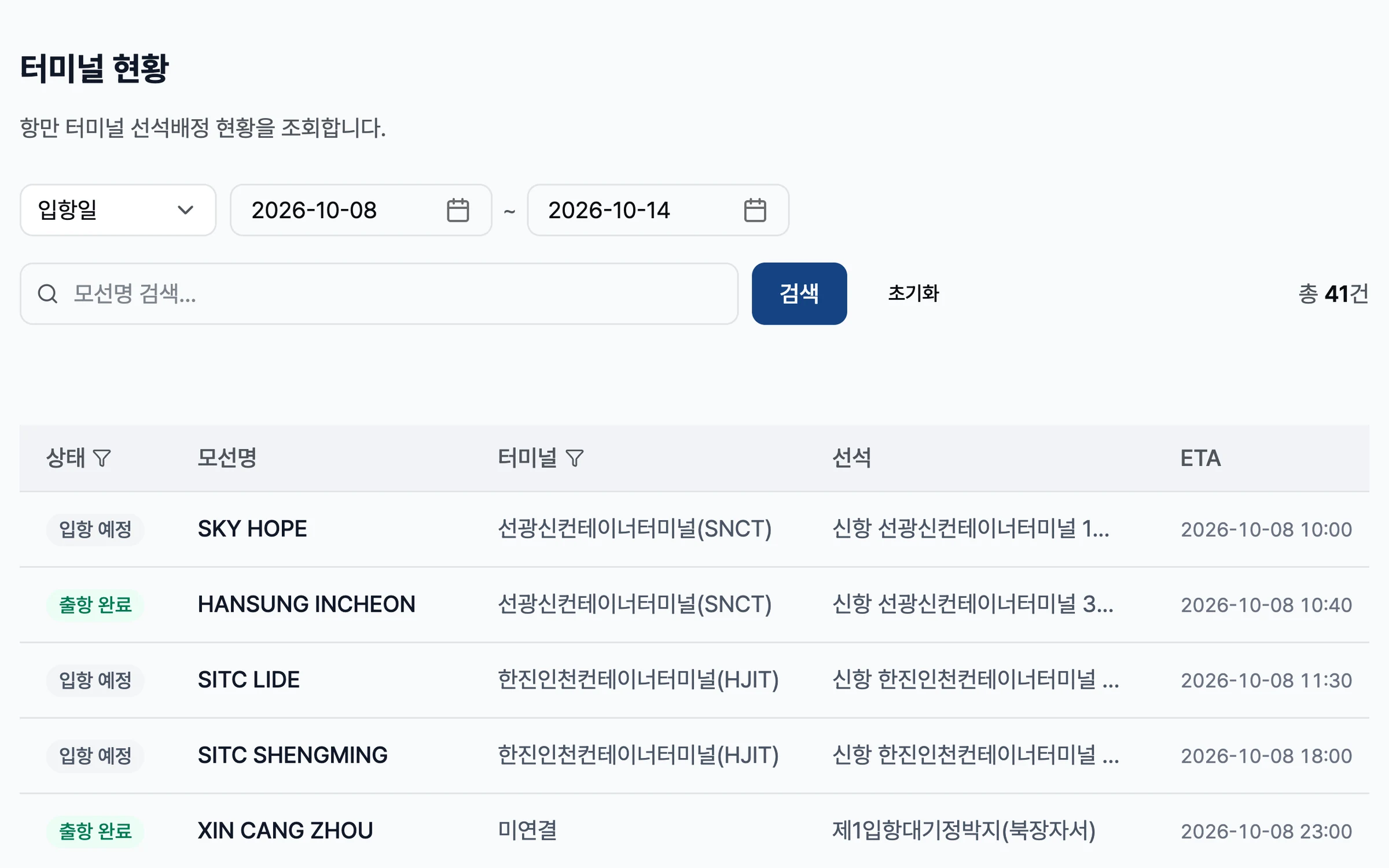
Berthing terminal information is hard to get, so you ask the forwarder or check terminal sites one by one.
To gauge discharge and plan trucking, you check the planned arrival time separately.
So trucks dispatched on an old schedule do not run up waiting or re-dispatch costs, you keep rechecking the arrival schedule.
Berthing terminals and arrival schedules are scattered across terminal sites, each laid out differently, so you have to look each one up again.
Berthing terminal, planned and actual arrival and schedule changes come together on one screen, so you can judge the schedule before dispatching trucks.
Find the vessel by its name, even without knowing the berthing terminal.
Plan trucking from the berthing terminal, berth and planned arrival.
Check how the actual arrival differs from plan and cut waiting and re-dispatch costs.
Vessel search
Find the berthing terminal from the vessel name alone, without knowing it first.
See vessels arriving and departing at a given port or period at once.
Planned arrival
Know where the vessel berths without looking up the terminal's site.
Before arrival, gauge when discharge happens and plan inland trucking ahead.
Schedule change
Do not miss arrivals and departures that differ from plan, and cut waiting and re-dispatch costs.
Right before dispatch, judge whether the schedule you checked is the latest, without separate inquiries.
More you can do
If the vessel carries your export cargo, check from the actual departure time whether loading is complete.
If a trading partner needs the arrival schedule, share the voyage link so they can view it without logging in.
If a vessel calls at several Korean ports, check the voyage at each port separately.
If the vessel has already left, change the period to search past voyages.
Customer stories
“We dispatch trucks after checking the arrival schedule, and our waiting costs went down”
We bring in pet supplies by container from overseas and truck them inland to our warehouse. We used to dispatch trucks without knowing the arrival schedule had changed and ran up waiting costs. Now we check the arrival schedule and any changes by vessel name before dispatching.
“We check the berthing terminal from the vessel name alone”
We bring in toys made at overseas factories and need them in stock for each sales season. We used to ask the forwarder to find out which terminal a vessel would berth at. Now we check the berthing terminal and planned arrival by vessel name and plan trucking and inbound in advance.
Connected services
Trade AI
Handle everything from the berthing terminal and arrival schedule to refreshing the latest schedule in chat.
No. The terminal status list and voyage details open without logging in. Sharing a voyage by link requires logging in.
You can search voyages at 9 Korean ports, including Busan, Incheon, Pyeongtaek, Gwangyang, Ulsan, Gunsan, Daesan, Jeju and Masan, and narrow the search by port and terminal.
Port call information is collected and updated every hour, and the voyage detail shows when it was collected. Refresh a voyage to load the latest information.
The arrival time is when the vessel entered the port, and it can differ from the actual berthing time. The berthing terminal and berth are shown from the port call report.
Get the brochure or request a consultation.